Frequently Asked Questions About Multiple Sclerosis
Answers to common questions about symptoms, testing and support
What is multiple sclerosis (MS)?
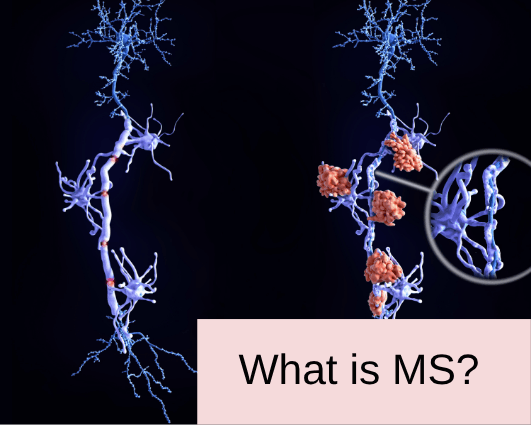
MS is a chronic disease of the brain and spinal cord. The immune system mistakenly attacks the protective coating around nerves, which disrupts messages between the brain and the body.
Symptoms and how the disease progresses are different for everyone.
Who gets MS?
Anyone can develop MS, but it’s more common in women than in men. It’s most often diagnosed between ages 20 and 50.
What are the early signs of MS?
Common early signs include numbness or tingling, fatigue, bladder issues, vision problems, oral health problems, weakness, dizziness or balance problems and muscle stiffness. Many of these symptoms can have other causes, so having one doesn’t mean you have MS.
Can MS symptoms come and go?
Yes. Many people have periods when symptoms flare up and periods when they improve. That can make it harder to recognize, so keeping a symptom record and noting when they happen can help your provider.
Is there a test for MS?
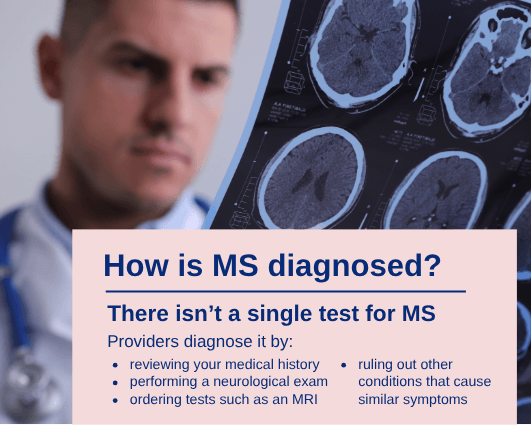
There isn’t one single test. Providers use your medical history, a neurological exam and tests such as an MRI, and they rule out other conditions that can cause similar symptoms.
Getting a diagnosis can take time.
Is MS contagious or inherited?
MS is not contagious. Having a close relative with MS can raise your chances somewhat, but most people with a family member who has MS never develop it.
Researchers are still learning about what causes MS. They believe a mix of factors trigger it.
Is there a cure for MS?
There’s no cure yet, but treatments can help manage symptoms, reduce flare-ups and slow disease progression. The right approach is different for each person. Talk with your health care provider about your options.
When should I talk with a health care provider?
Talk with a provider if you have new symptoms, symptoms that last for more than a few days or symptoms that keep coming back. Don’t wait for them to go away on their own. Bring a list of your symptoms and questions to your appointment.
Where can I find support in Wisconsin?
The following organizations offer information and support directly.
Statewide organizations and helplines:
- National MS Society, Wisconsin chapter:
- Find local programs, support groups and resources through the Wisconsin chapter organizations and helplines.
- Find local programs, support groups and resources through the Wisconsin chapter organizations and helplines.
- MS Navigators: Get personal guidance on insurance, symptoms and daily living.
- Call 800-344-4867, email ContactUsNMSS@nmss.org or chat online through the National MS Society’s Ask page.
- Chat hours: Monday-Friday, 9 a.m. to 5 p.m. Chat is in the lower right corner and redirects to email when no MS Navigators are available.
Other national MS groups that run their own helplines and programs:
- The Multiple Sclerosis Association of America (mymsaa.org)
- MS Focus (msfocus.org)
Can I get help with the cost of testing?
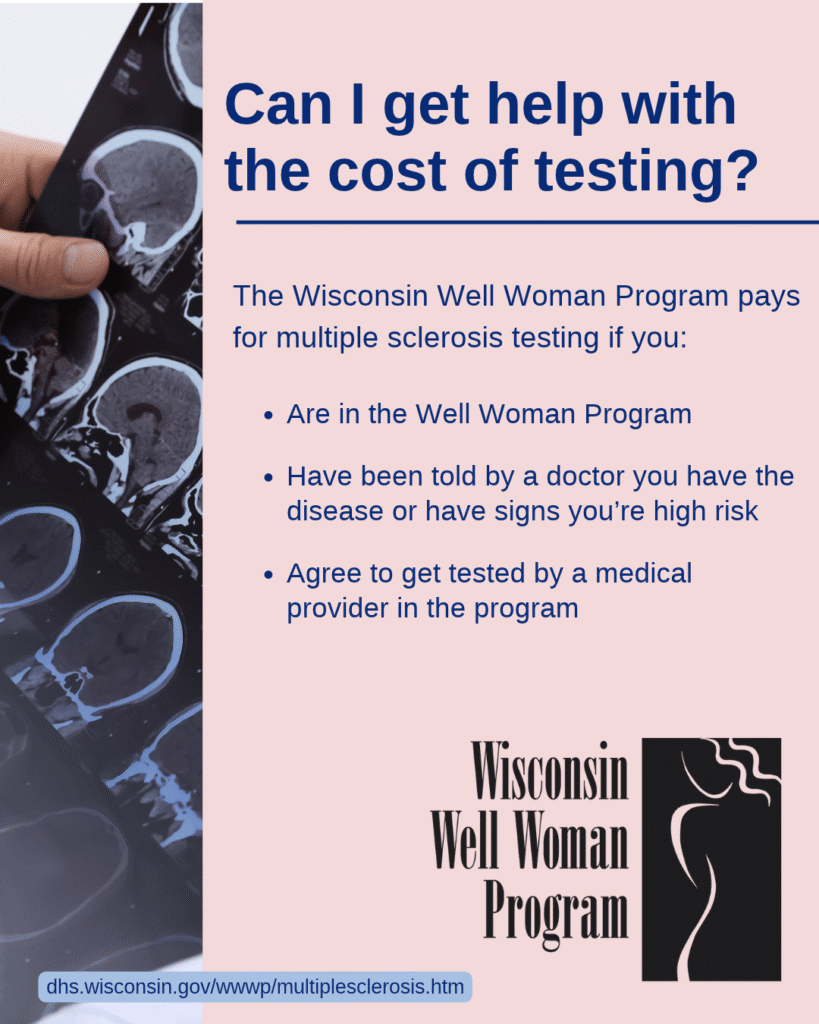
The Wisconsin Well Woman Program may pay for MS testing if you are enrolled in the program, a doctor has told you that you have MS or that you show signs of being at high risk and you agree to be tested by a provider in the program.
Your local program coordinator can schedule testing and connect you with free or reduced-cost treatment if you are diagnosed.
Call 800-642-7837 or read the MS testing guide to learn more.